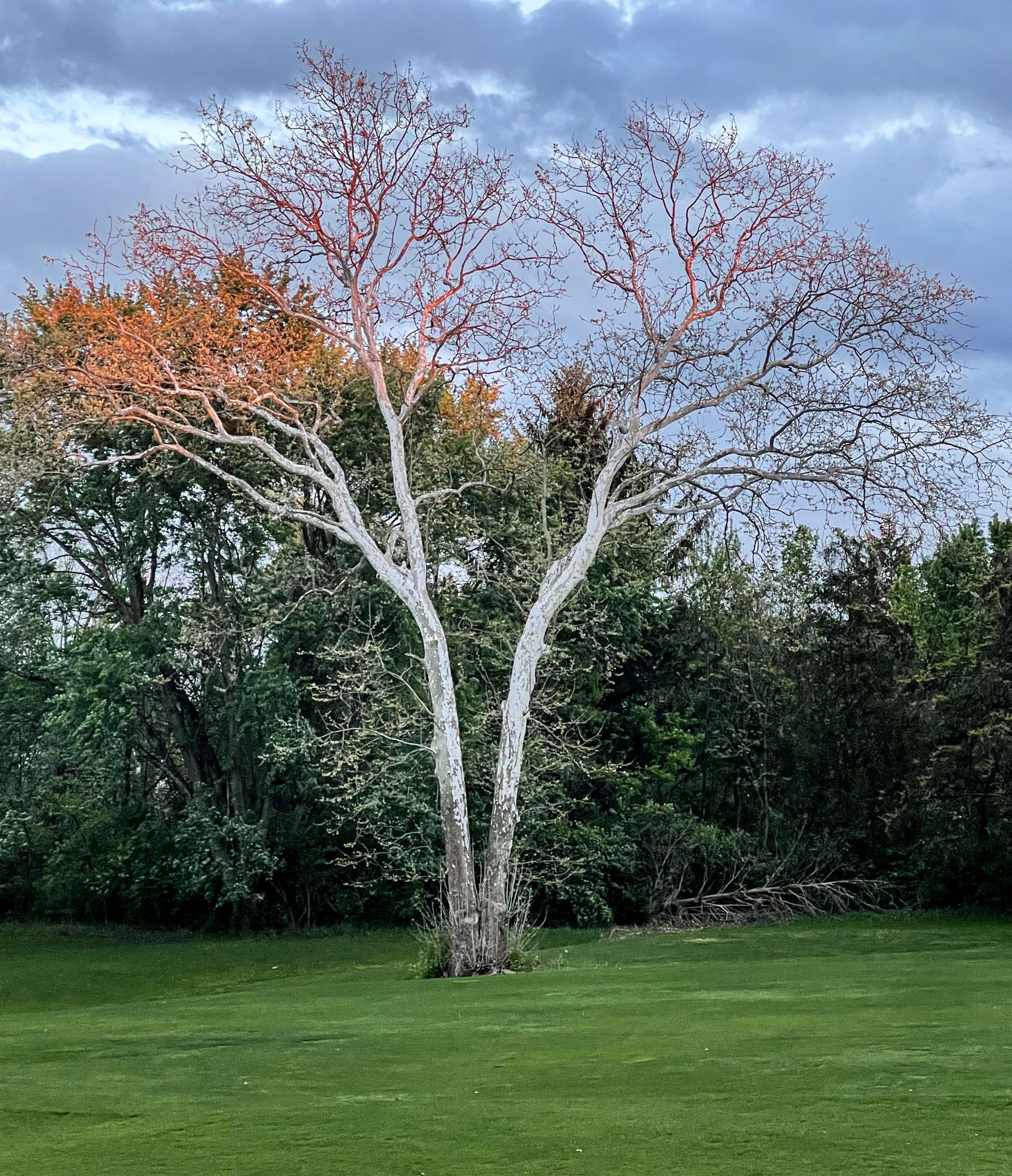
We call it American white oak. I would love to know what the Hopewell people called it, but their language was never recorded. However, Shawnee is a descendant language. And they call it mši ("m-shee"). Similarly, the Miami-Illinois, another descendant Algonquian language, called it mihši ("mee-shi").
It occurs to me to say all of this because when it comes to trees, a person of the Shawnee culture may have touched this very tree's bark. It would have been called something by that person, before we came along and called it something else. This beautiful bifurcated friend would have descended from a tree which never saw a European.
Trees have a different relationship with time than us. We come and go while these creatures trudge by in wait.
It is refreshing to know that, if we do an ok job here, there is a young Quercus Alba out there which may see year 3,000. One you may share a golf course, or a park path, or a horse trail with. Perhaps they can say hello to Fry.